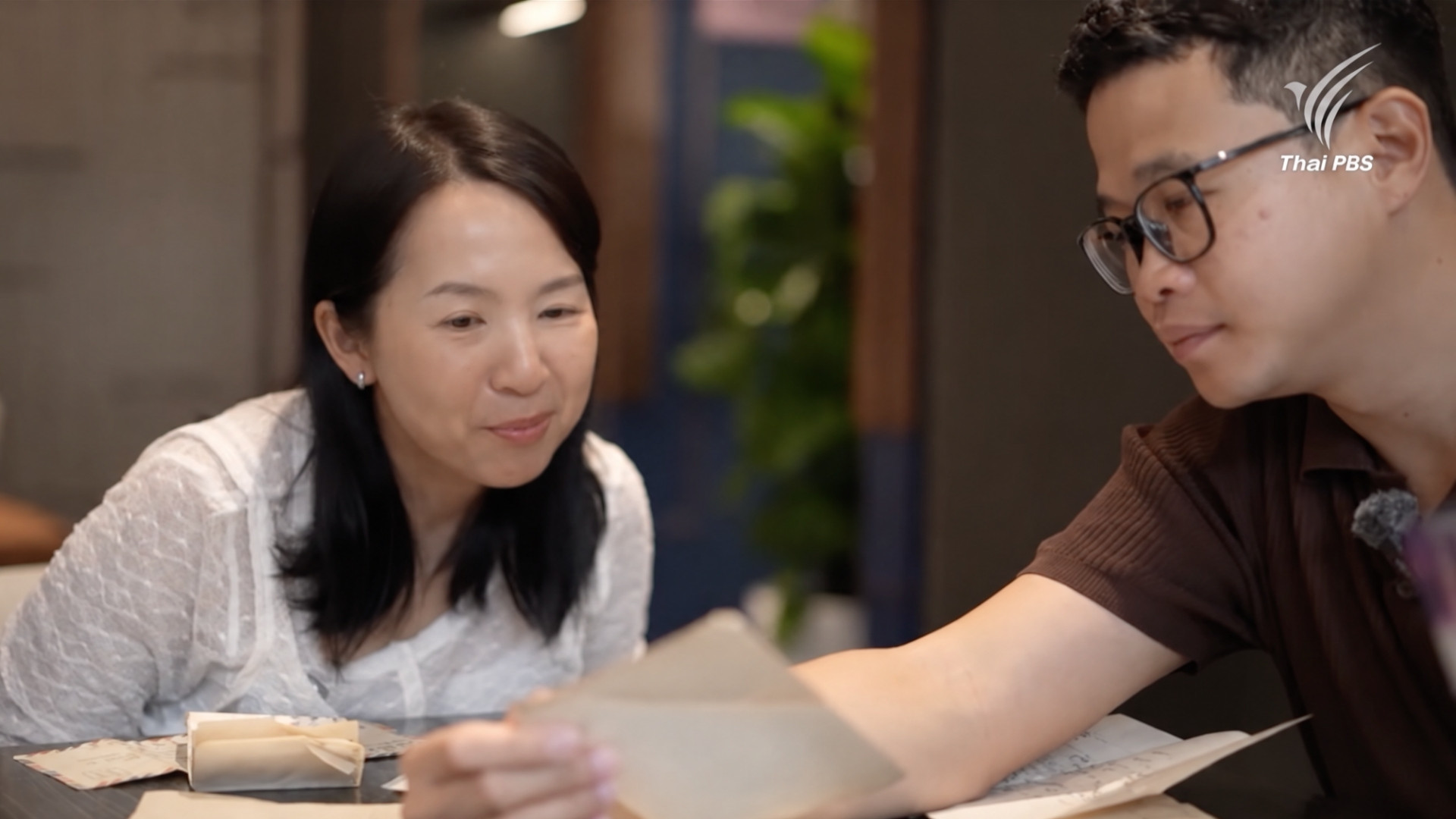

In August 2026, UnseenChina founder Akenarong Suksupakit worked with the China Compass team from Thai PBS to produce a TV program about a Thai-Chinese family searching for their roots in Chaoshan Region, China.
For this journey, UnseenChina planned and arranged the entire search process. Akenarong also joined the production as the host of the program.
The guest, Napaporn Wijitkunwat (Kim), is a Thai woman of Chinese descent. Decades ago, her grandfather left China with her father and moved to Thailand. Kim was born and raised in Thailand. At the age of 42, she decided to travel to China to search for her family, bringing with her old family photographs, letters that had been sent from China to Thailand many years ago, and photographs of the graves of her Grandfather who had passed away in Thailand.
Based on the information Kim had, the UnseenChina team took her and the China Compass crew to the Chaoshan region for a two-day search for her family.
The Search
1. Identifying the family’s ancestral hometown
Kim provided old family photographs, letters, and photographs of the graves of relatives who had passed away in Thailand.
Using these few remaining clues, the UnseenChina team was able to work out key information about her family, including the likely place of origin in China, family names, ages, and family relationships.
The team determined that Kim’s family was originally from Puning. Her grandfather was from Xiqing Village, while her grandmother was from Nigou Village. After they married, Kim’s father was born in Xiqing Village. When he was still a child, he followed his father to Thailand, while his mother remained in Nigou Village.
2. Following the family records to her father’s ancestral village
Akenarong first took Kim and the China Compass crew to Xiqing Village to search for relatives on her father’s side.
The local China Compass team was already waiting there. They had checked the information in advance and confirmed that Xiqing Village was indeed Kim’s ancestral home.
Once the China Compass crew arrived, the local team took them to the family ancestral hall shown in Kim’s old photographs. There, they also found relatives the family had lost contact with many years ago, including Kim’s cousin-in-law, Zheng Xiuchong, and her paternal aunt, Huang Chanzhu.
3. Reuniting with relatives on her father’s side
Zheng Xiuchong and Huang Chanzhu invited Kim and the program crew back to their home, where they spent time together and reunited as a family.
4. Following a letter and an old photograph to her grandmother’s hometown
Next, Akenarong took Kim and the China Compass crew to Nigou Village to search for relatives on her mother’s side.
Because many Chinese place names and local addresses have changed over the years, the address written on the old letter, “Outside the North Gate of Nigou Village,” did not provide a specific location.
The UnseenChina team asked local residents about the old address and narrowed down the area. They then contacted a respected elder in the village. Using the only photograph they had, the team was able to identify Kim’s relatives on her grandmother’s side, including Zhang Fengqing.
However, Zhang Fengqing was no longer living in Nigou Village. During a phone call, Kim learned that she had later moved to Guangzhou with her descendants.
The UnseenChina team then took Kim and the China Compass crew to the place in China where Kim’s grandmother had lived before she passed away.
A Family Reunion Across Generations
The two-day search eventually came to an end.
Kim’s father had already passed away, but she was finally able to find his family in China and complete the search on his behalf.
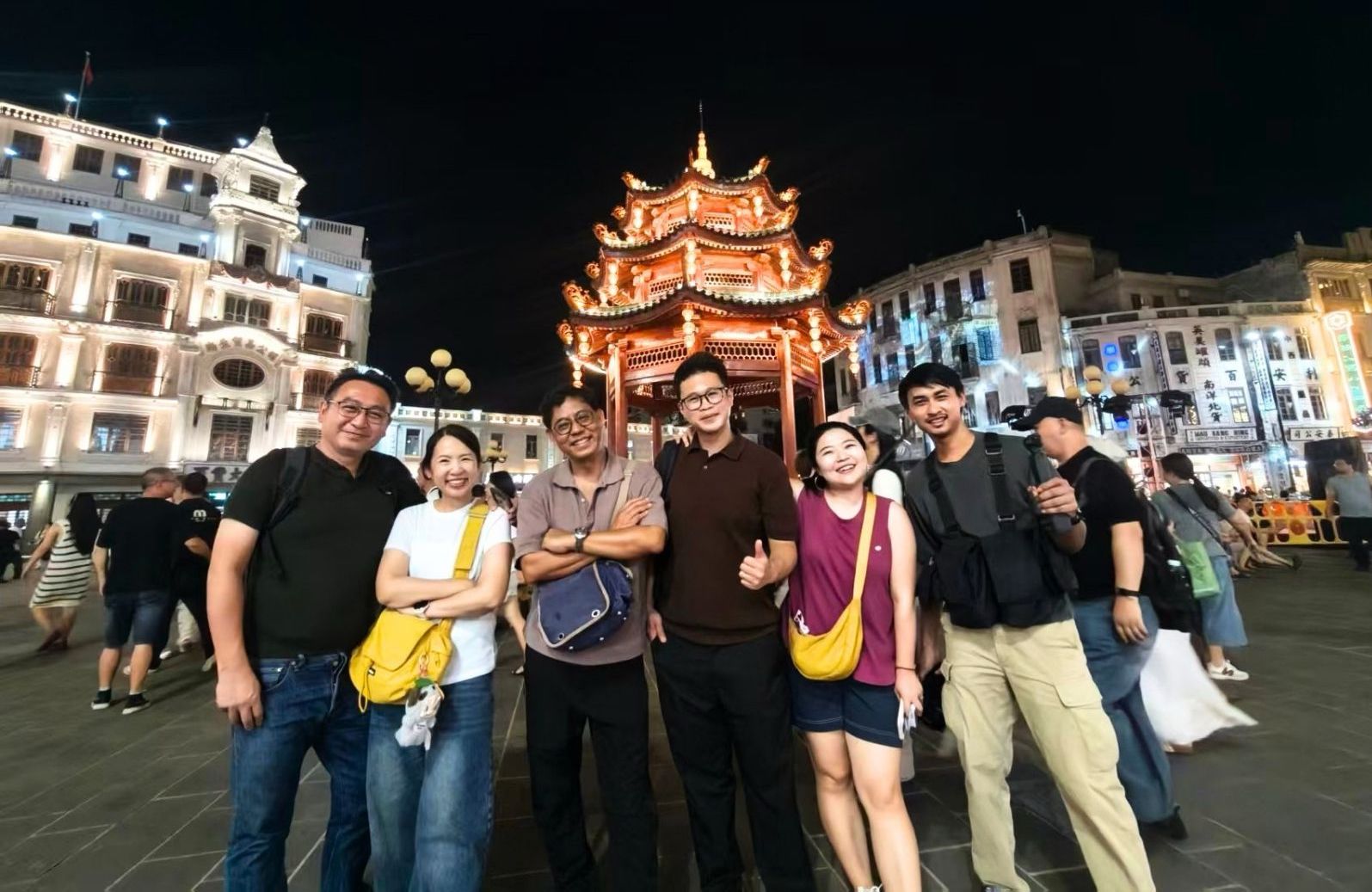
The program was jointly planned by Unseen China and Thai PBS. UnseenChina provided the itinerary planning, transportation, on-site coordination during filming, and assistance in locating the family throughout the trip.
The China Compass team turned the Puning family search into a television program titled China Compass: The Letter from the Chaozhou People, which was broadcast on Thai PBS on Saturday, October 3, 2026.

